Having followed the ski industry for 40 years, Patrick has seen things change from environmental campaigners being regarded as a nuisance by resorts wanting to open more terrain in the 1980s and 90s, to some of the same people being employed by ski areas in recent decades as snow centres put environmental management of their operations front and centre.
Patrick became aware of the impact of climate change on ski areas early on in his career and has followed its growing impact, and ski areas attempt to mitigate it. The wider media first started to report on the issue in the early 2000s vaguely saying skiers ought to do something, but not really suggesting much except turning lights off and closing windows when they left their accommodation.
They also advised skiers checked the environmental credentials of resorts they planned to visit, but this wasn’t easy with little information out there and a lot of what there was really often “greenwash” material used as resort marketing by the more savvy corporate resorts.
In 2002 Patrick created the ‘Green Ski Resort Guide’ which collected comparable factual information from the leading 250 ski areas. It detailed things like whether they were green energy powered, had rail travel access, adopted an eco-management policy in their operations and carried a greenwash-free, succinct summary of each area’s efforts.
To get the information out there Patrick set up SaveOurSnow.com in 2004, a site dedicated to reporting on the ski industry’s efforts to fight climate change and gave the database free-of-charge for use by the Ski Club of Great Britain who put it on their website as part of their wider Respect The Mountain campaign.
Over the past few decades ski resorts have continued to make ever greater efforts on the environment. In truth, most were pretty good before global warming was widely known simply as energy efficiency was essential for viable operation.
SaveOurSnow.com has evolved over the years and continues to bring the main news stories. The database is still there but rarely updated., with a more recent version highlighting individual properties in resorts that are especially eco-friendly.
Patrick has also worked on numerous articles and studies on the issue including detailed analysis of CO2 emissions depending on how you travel and where from to different resorts.
The truth is that as ski resorts are so environmentally efficient, usually much more so than our homes and businesses, the main environmental issue is how we travel to them. That’s addressed by websites such as SnowCarbon and SkiFlightFree.
There’s also the bigger issues. First that rogue regimes around the world are ignoring the reality of climate change, which we are increasingly experiencing first hand in the form of temperature spikes and violent weather events. They are accelerating the destruction of the planet through their selfishness. Second, that because of that, the impacts of climate change and the loss of snow are so much greater than the loss of ski slopes and third that whatever efforts ski areas make to be greener themselves, those are positive impact is infinitesimally small compared to the climate warming activities of the world around them.
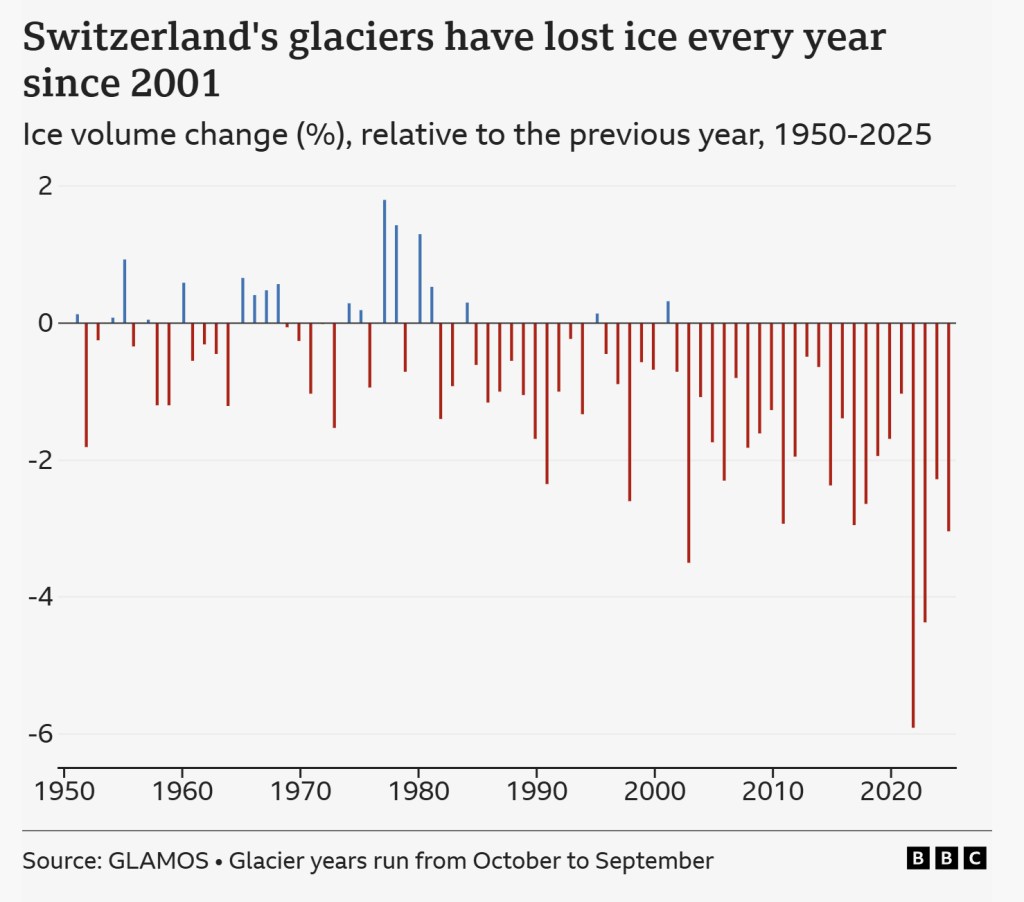
Overall, rather than slow, the rate of warming has accelerated since the start of the century, particularly in the past 10 years.
That’s not to say we shouldn’t keep fighting of course. We need to try to get enough people to realise that not changing our ways faster will quickly not only destroy the remaining snow but soon generate the extreme weather that will kill our descendants, and to vote in those who will at least try to do something. In the winter sports sphere ProtectOurWinters (POW) is the main body leading the fight.
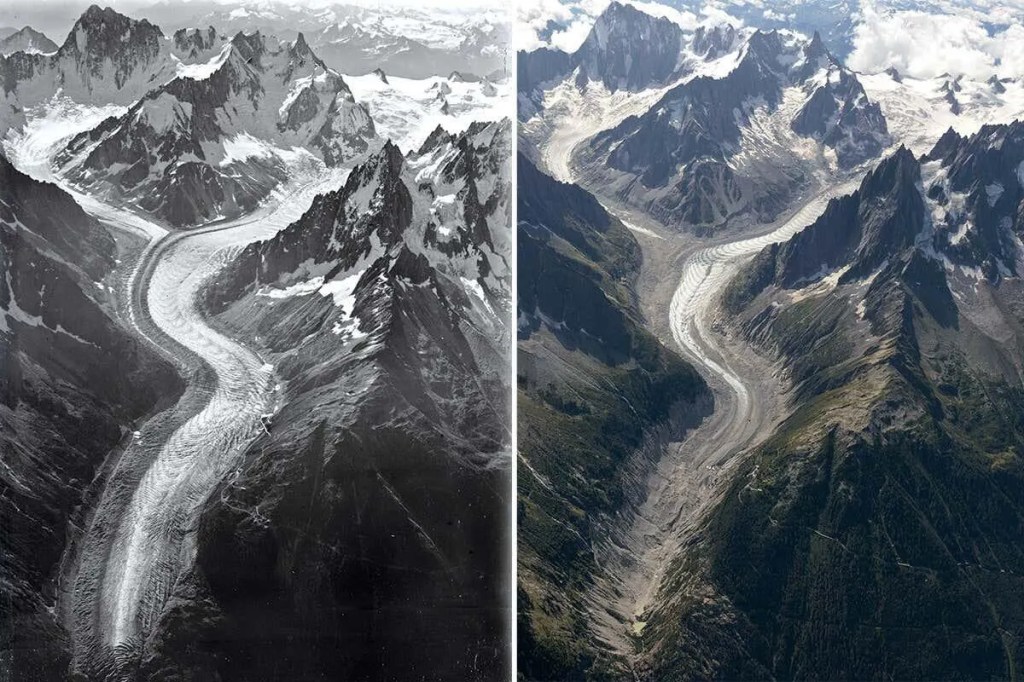
The Mer de Glace which lies below the world’s longest lift served ski run, the Vallée Blanche, a legendary, 20 km off-piste glacier ski route in the Mont Blanc massif, accessible from Chamonix.